How to Play American Mahjong
A warm, plain-English guide for your very first game, with no experience required and no jargon left unexplained. Pour the iced tea, invite three friends, and let’s learn.
A friendly note: mahjong rules vary from table to table and edition to edition. This guide describes the way American mahjong is commonly played. Your group or your scorecard may do a few things differently, and that is part of the tradition.
What Is American Mahjong?
American mahjong (often spelled “mah jongg”) is a four-player game of skill, memory, and a little luck, played with a set of beautiful tiles instead of cards. It descends from the classic Chinese game but evolved its own personality in the United States in the 1920s and 30s: jokers, racks, the Charleston pass, and an annually changing card of winning hands.
It is social by design. The rhythm of drawing, discarding, and passing leaves plenty of room for conversation, which is why the game has anchored weekly gatherings for a century.
The Objective
Each player works to complete a specific 14-tile winning combination, called a hand, chosen from a set of valid patterns (most groups use a league-style scorecard that changes each year). The first player to assemble their complete hand declares “Mahjong!” and wins the round.
What You Need to Play
- An American mahjong set with 160 tiles including flowers, jokers and blanks.
- Four racks with pushers to hold each player’s tiles and deal the wall.
- A table mat to quiet the shuffle and protect your table.
- A current scorecard of winning hands (published annually by mahjong leagues).
- Four players and an unhurried afternoon.
Understanding the Tiles
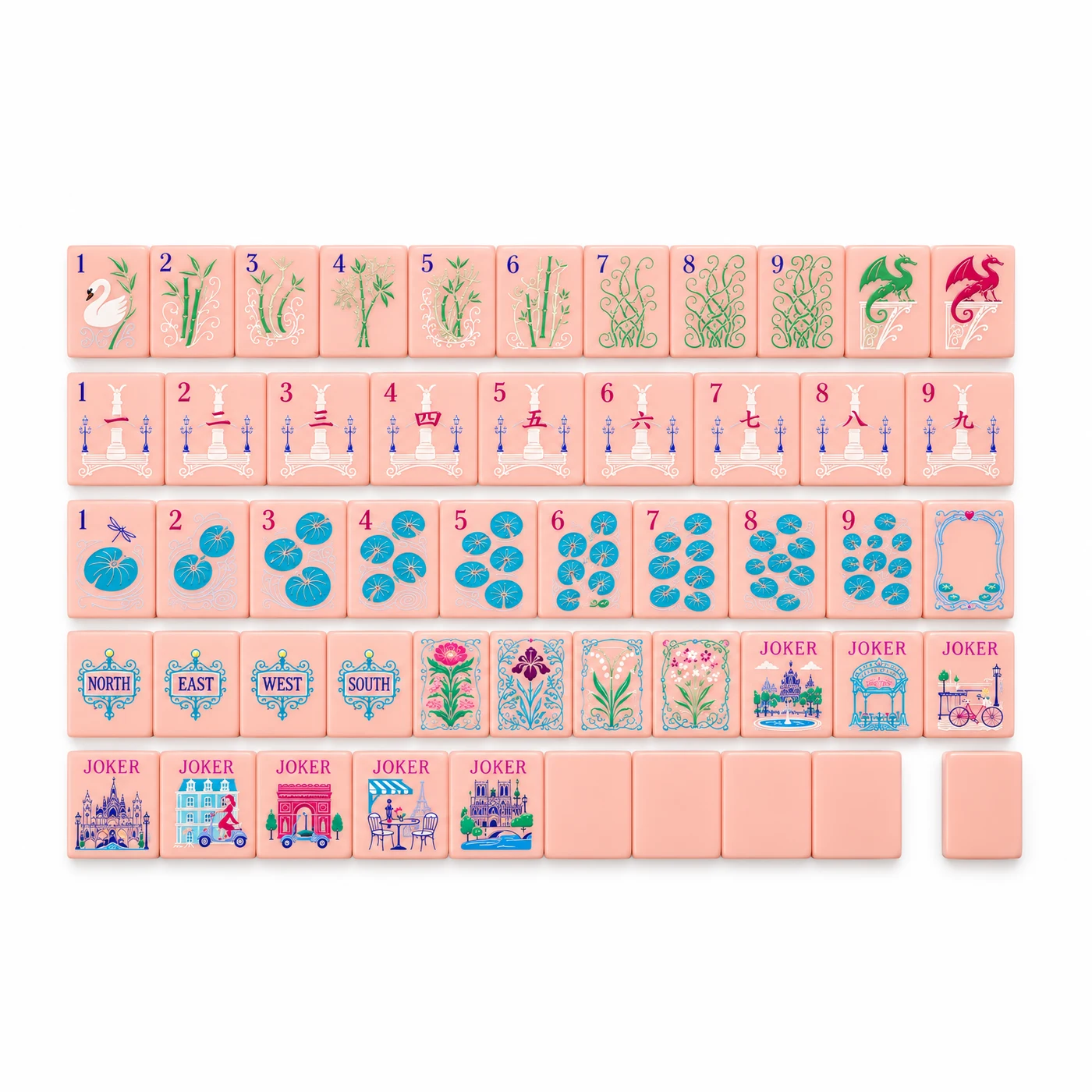
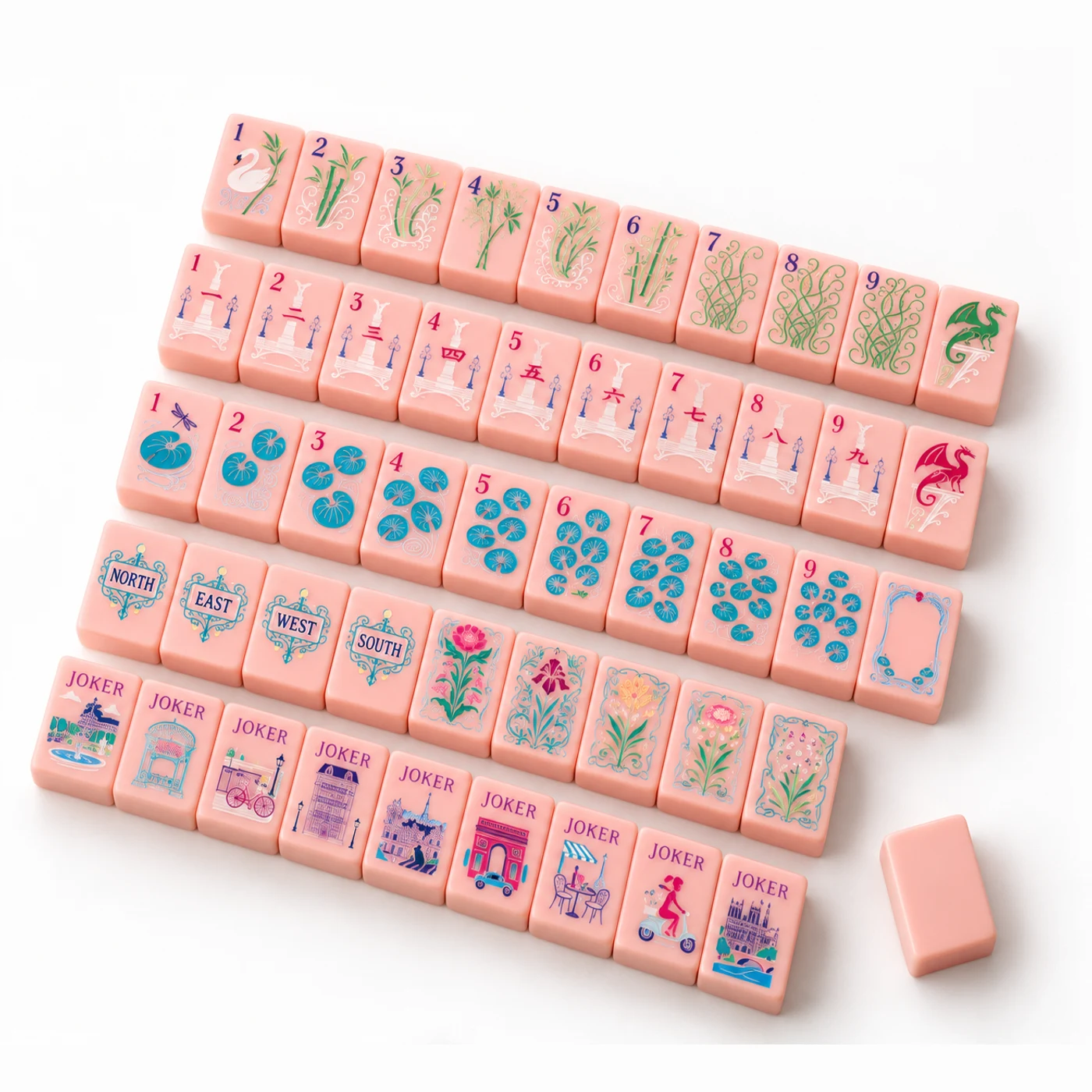
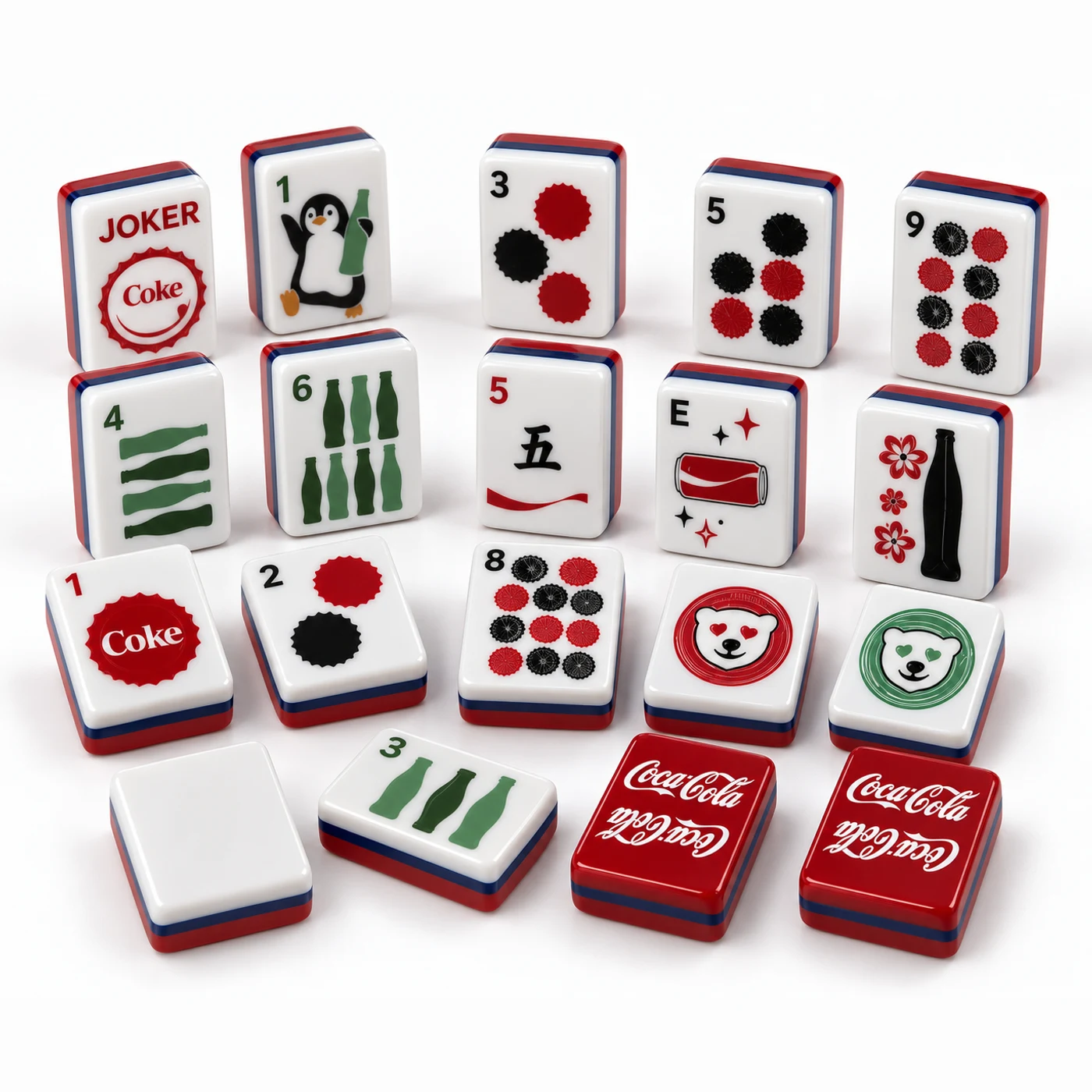
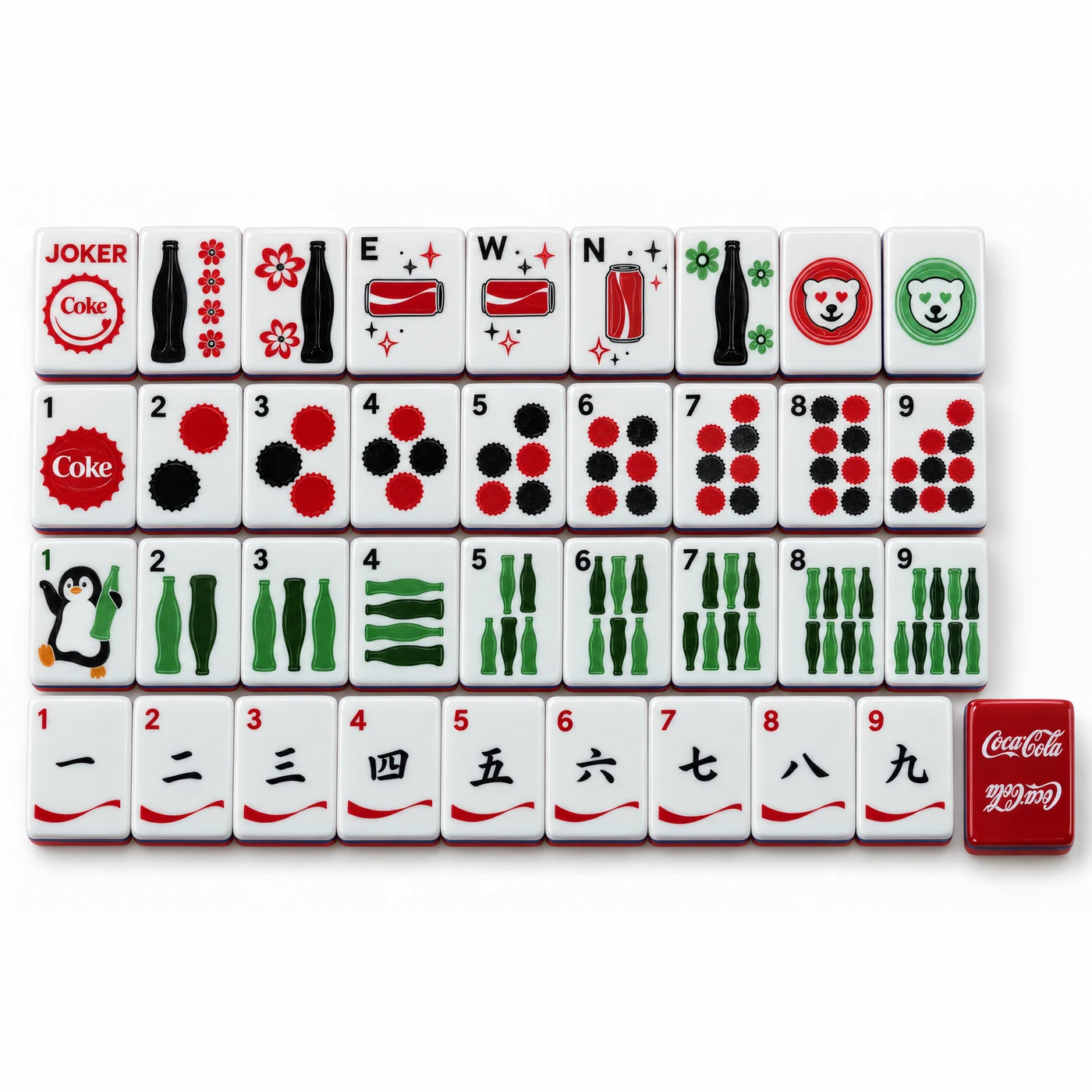
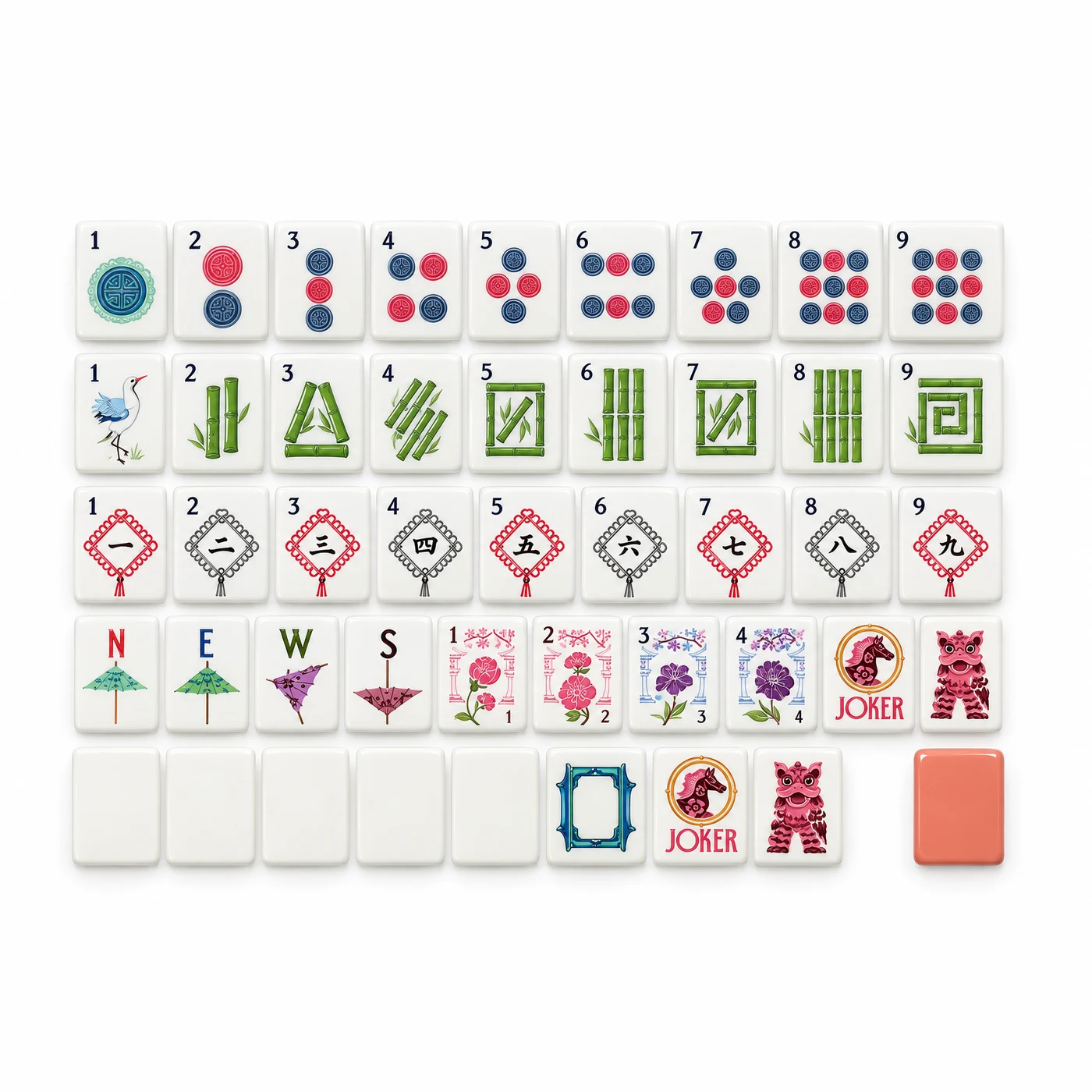
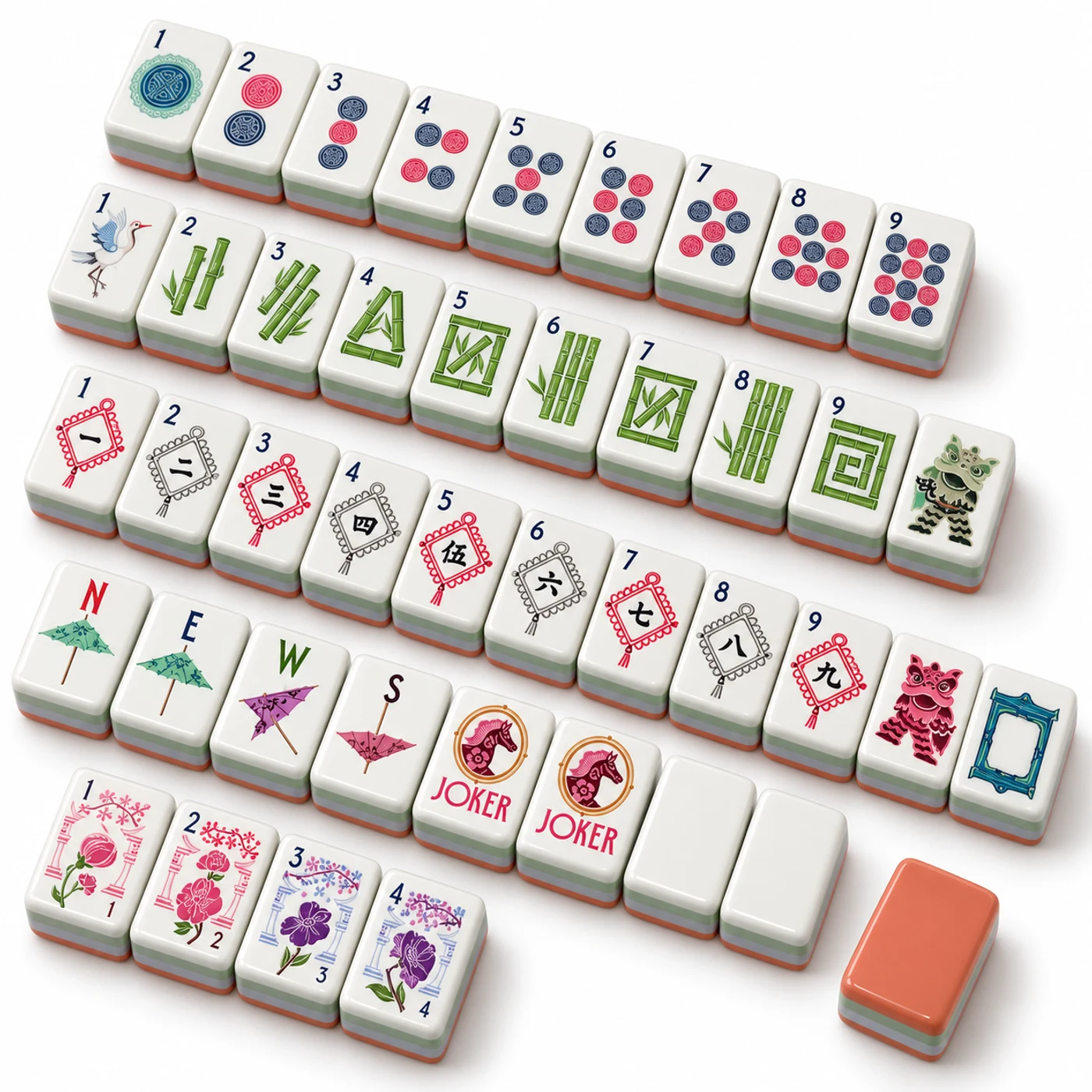
A Casa Mahjong set holds 160 tiles:
- Three suits. Craks (characters), Bams (bamboos), and Dots (circles), each numbered 1 to 9, four of each tile.
- Winds. North, East, West, South.
- Dragons. Red, Green, and White (the white dragon, or “soap,” often doubles as a zero).
- Flowers. Eight numbered tiles, used in many hands.
- Jokers. Ten wild tiles that can stand in for others in certain combinations.
- Blanks. Six spares, kept aside to replace a tile that goes missing over the years.
Setting Up the Game
- Place all tiles face down and give them a good shuffle, the famous “washing of the tiles.”
- Each player builds a wall two tiles high along their rack’s pusher (with a 160-tile set, each wall is 20 stacks long, though tables vary).
- Roll the dice to choose the dealer (East). East breaks the wall at the point the dice indicate.
- Players draw in turn until everyone has 13 tiles. The dealer takes 14. Tiles go on your rack, hidden from the other players.
The Charleston
Before play begins, American mahjong adds its signature ritual: the Charleston, a series of blind passes that lets you shape your hand.
- First Charleston (required): pass three unwanted tiles right, then three across, then three left.
- Second Charleston (optional, if all agree): pass left, across, then right.
- Courtesy pass: exchange up to three tiles with the player across from you.
Two house rules to remember at most tables: jokers may never be passed, and in certain passes you may “steal” by keeping tiles moving rather than passing three. Your scorecard’s instructions govern.
How a Turn Works
Play moves counterclockwise, starting with East:
- Draw the next tile from the wall (or, in some cases, claim the most recent discard).
- Consider. Does it move you toward your chosen hand?
- Discard one tile face up to the center, naming it aloud: “Two Bam.” Your hand always returns to 13 tiles.
A discard may be claimed by another player, but only to complete an exposure (see below) or to win. Otherwise, the next player simply draws from the wall and the rhythm continues.
Jokers
Jokers are the wild cards of American mahjong, and half its strategy:
- A joker can stand in for any tile in a grouping of three or more identical tiles (pung, kong, quint).
- Jokers may not be used in pairs or in most single-tile positions.
- If another player has exposed a grouping containing a joker and you hold the actual tile it represents, you may exchange your tile for that joker on your turn, a small thrill that never gets old.
Exposures
When you claim another player’s discard to complete a grouping, that grouping must be placed face up on top of your rack. This is called an exposure. The rest of your hand stays hidden.
Exposures are only allowed if you are playing an “exposed” hand (your scorecard marks which hands may be exposed and which must stay concealed). Choose carefully: exposures tell sharp-eyed opponents a story about what you’re building.
Declaring Mahjong
When your 14th tile completes a valid hand from the scorecard, whether drawn from the wall or claimed from a discard, you declare “Mahjong!” and lay your hand down for the table to verify against the card.
If the hand is valid, you win the round and score according to the card’s value for that hand. If it isn’t (it happens to everyone eventually), your hand is “dead” and play continues without you, a rite of passage every player shares sooner or later.
Common Mistakes
- Passing a joker during the Charleston (never allowed).
- Using a joker in a pair (jokers only work in groups of three or more).
- Exposing tiles for a hand marked “concealed” on the card.
- Forgetting to name your discard aloud. Say it clearly for the table.
- Rearranging your rack so often that you lose track of your own plan.
- Chasing two hands at once for too long. Commit by mid-game.
Tips for New Players
- Start with one section of the scorecard and get comfortable before exploring the rest.
- Sort your rack by suit and number right after the deal. A tidy rack is a clear mind.
- Watch the discards: they tell you what’s safe to throw and what your neighbors need.
- Guard your jokers; give them up only when they clearly advance your hand.
- Play your first evening with open hands and gentle coaching. The fun arrives long before mastery does.
Frequently Asked Questions
How many people do you need to play American mahjong?
American mahjong is designed for four players. Three-player variations exist at many tables, but four is the classic game.
How long does a game of American mahjong take?
A single hand usually takes 15 to 30 minutes once everyone knows the flow. Most groups play several hands in a session, which is how an afternoon disappears.
What is the difference between American and Chinese mahjong?
American mahjong uses jokers, racks, a scorecard of valid hands that changes yearly, and a unique passing ritual called the Charleston. Chinese mahjong has no jokers or Charleston and uses a different set of winning patterns.
Do I need a scorecard to play?
Most American groups play with a current league-style scorecard, which lists the valid winning hands for the year. You can also play with house rules or practice hands while you learn. Scorecards are sold by their publishers; one is not included with our sets.
Is American mahjong hard to learn?
The basics take one evening: draw a tile, discard a tile, build toward a hand. The Charleston and the scorecard add depth over time. Most new players are enjoying themselves within the first hour.
Ready to set the table?
Everything you need for your first game: engraved tiles you can actually read, racks that glide, and mats that hush the shuffle.
Shop the Collection